
The ad tech industry doesn’t start and finishes with Google AdSense. In fact, there are many alternatives for publishers who want to generate revenue outside Google. You can combine several networks to generate the highest revenue. Here we explore and bring you our top 10 picks for 2021.
Content:
Short in Time? These Are Our Top 5 Ad Networks
PositionAd NetworkOverview
#1 CodeFuel A complete holistic solution for publishers, leveraging search, ads, and news monetization options while enhancing the UX
#2 Amazon for Publishers Unified ad marketplace for Amazon clients to leverage ads on and off Amazon
#3 Google Adsense and Google Marketing Network The most popular Ad network, allows publishers to monetize their websites by presenting ads on their digital properties.
#4 Taboola An ad network that matches campaigns to specific publishers. Presents content in a newsfeed format.
#5 Outbrain An end-to-end platform for serving ads to top publishers. Focuses on inventory management.
What Is an Ad Network and Why Do You Need One?
An ad network is an intermediary that introduces the right publisher option to the right buyer. It connects publishers (suppliers) and advertisers (buyers) to match their campaign goals.
You can work with several ad networks according to the different types of ad formats you work with. There are video ad networks that serve video content, and others that focus on the best CPM rate.
How do you choose the best ad network for your company?
There is a good deal of different advertising networks offering video ads, in-feed ads, and display advertising to choose from. But before choosing the network, you should start first by evaluating your marketing needs.
Key factors to consider
Content:
Short in Time? These Are Our Top 5 Ad Networks
PositionAd NetworkOverview
#1 CodeFuel A complete holistic solution for publishers, leveraging search, ads, and news monetization options while enhancing the UX
#2 Amazon for Publishers Unified ad marketplace for Amazon clients to leverage ads on and off Amazon
#3 Google Adsense and Google Marketing Network The most popular Ad network, allows publishers to monetize their websites by presenting ads on their digital properties.
#4 Taboola An ad network that matches campaigns to specific publishers. Presents content in a newsfeed format.
#5 Outbrain An end-to-end platform for serving ads to top publishers. Focuses on inventory management.
What Is an Ad Network and Why Do You Need One?
An ad network is an intermediary that introduces the right publisher option to the right buyer. It connects publishers (suppliers) and advertisers (buyers) to match their campaign goals.
You can work with several ad networks according to the different types of ad formats you work with. There are video ad networks that serve video content, and others that focus on the best CPM rate.
How do you choose the best ad network for your company?
There is a good deal of different advertising networks offering video ads, in-feed ads, and display advertising to choose from. But before choosing the network, you should start first by evaluating your marketing needs.
Key factors to consider
Your target audience – Is your audience B2B or B2C? How large is your audience? Note your audience demographics, interests, location, and age group.
Your budget – for starting companies sometimes the budget can play an important part in choosing some networks.
Your niche – this is perhaps the most important factor in determining which network works best for you. Often, the more general the niche, the more general the network.
Your budget – for starting companies sometimes the budget can play an important part in choosing some networks.
Your niche – this is perhaps the most important factor in determining which network works best for you. Often, the more general the niche, the more general the network.
Types of Ad Networks
These are also called “niche” networks. These ad networks typically target industry or niche. For instance, there are display advertising networks that target software advertisers, publishers, and developers. These networks usually handle specific and high-converting, inventories.
General Ad Networks
Unlike specialized networks, these handle a broad spectrum of advertisers. In this category, we can find Google and Facebook ad networks. These bring huge audiences of consumers to the table, along with extensive and detailed customer data.
Promotion Platforms
These tools give you access to multiple ad networks, exchanges, and marketing resources. Promotion platforms help you manage multiple campaigns via multiple ad networks, access marketing resources, calculate marketing costs and optimize your marketing.
The Best Ad Network for Publishers for 2021
1. CodeFuel

Features:
App monetization – use an intent-based search to monetize your app or extension. Intent-based monetization with in-app ads.
Search mediation – optimized landing pages for your media campaigns regardless of where you buy media (Facebook, Google, Taboola, or Outbrain) You can deploy monetization pages on your own website.
Website monetization– present relevant shopping ads to encourage high intent users and increase conversions. Leverage search text ads with a customized search results page (SERP) with sponsored text ads.
NewsFuel Feed – premium news feed.
Pros
Flexible – offers monetization options across various platforms and verticals
All-in-one – you can leverage search, ads, shopping, and news to monetize your digital property.
Tracking and analytics
Centralized dashboard
Multiple integrations – integrates with MSN, Bing, Yahoo, AOL, and 1200 quality publishers. Also provides access to premium Google AdSense programs.
Cons
Not suitable for very small publishers. Requires a mid-size audience to find the high intent users.
Contact Us and Start Today!
2. Amazon

Features:
Unified Ad Marketplace – header bidding from Amazon and third-party partners via SSP.
Server-to-Server bidding integrations
REsponsive
Automated line item configurations
Single header tag integration
Centralized dashboard
Pros
Faster page loads
Unified demand
Easy integration
Cons
Managed service: you don’t have a lot of control
Restricted to Amazon clients
3. Bing for Partners

Features:
Syndication – you get paid to show Bing Ads on your website. Bing serves the ads tailored to your audience and content.
Search ads – customer search on Bing and partner and get served custom ads according to search keywords.
Cross-device search results – responsive search results and ads for PC, mobile, and tablet.
Pros
Has three search engines – Bing, Yahoo, and AOL
Bing network is growing, reaching searchers that aren’t reached with Google AdWords.
You can import your Google Ads campaign
Cons
According to Trustradius:
Cannot target specific countries with the partner network
Network placement sometimes is low quality
Not available on Mac
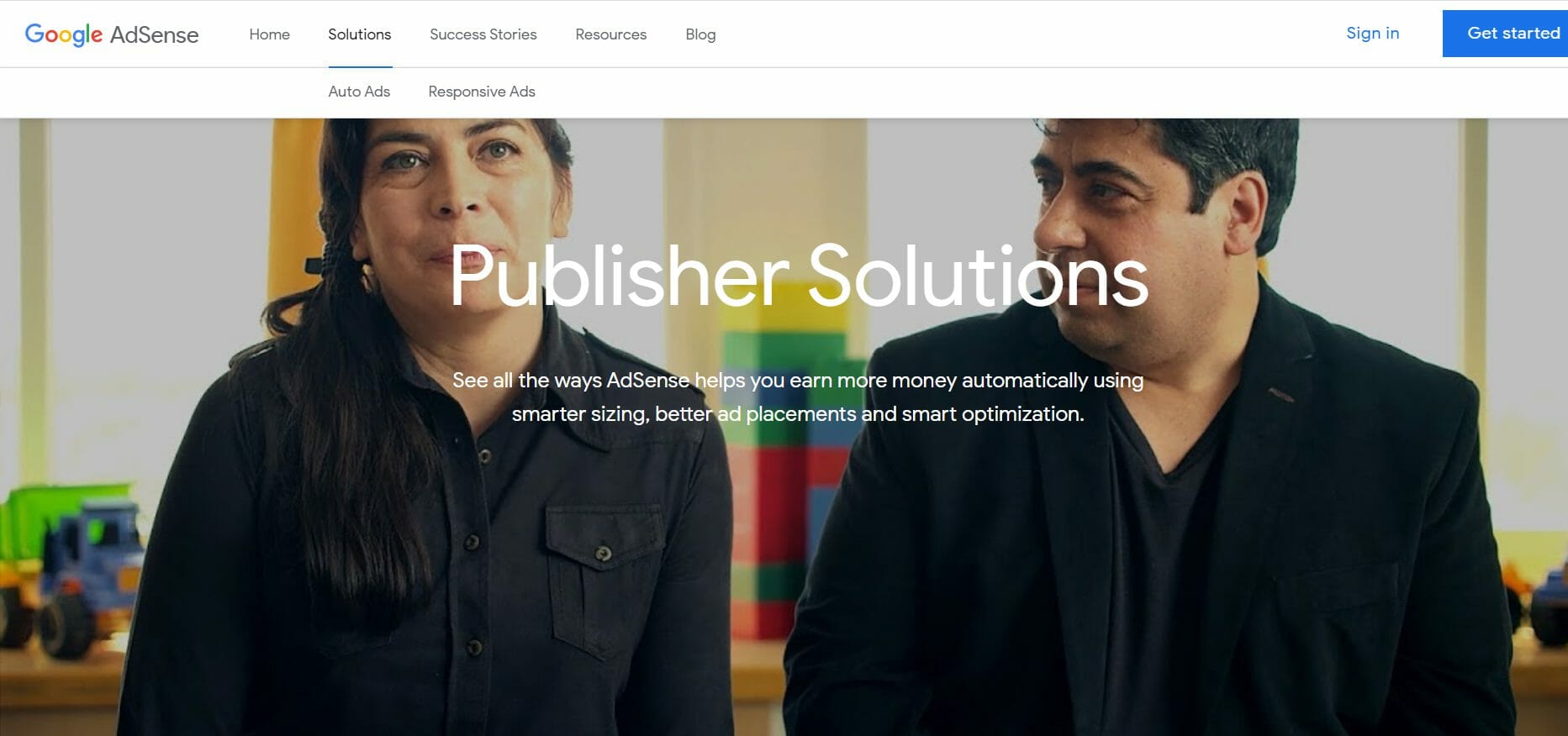
4. Google Adsense and Google Doubleclick Ad Exchange
Features:
Automated Ads – analyzes your pages and places ads based on layout, content, and existing Google ads.
Ad size optimization – automatically adapts the size of the ad to your user screen. So more ads can fill the ad units.
Requirements – A Google Account and a website that receives more than 300,000 monthly page views.
Pros
Simple – you just need a Google Account and website
Easy to use – add the same line of code to each page you want to show ads.
Responsive – automatically adapts to mobile.
Cons
Google restricts working with other ad networks. You can use CodeFuel to get access to the premium Google ad network: Google Marketing Network.
5. Taboola

Features:
Feed – presents content in a scrolling news feed type.
A/B testing
Online content discovery
Native advertising – advertiser-side. Matches and targets campaigns to specific publishers according to content.
Pros
It’s easy to set up campaigns
Provides many options for targeting
Supports several audiences
Cons
Not friendly interface
Not performance whitelisting
A/B testing
Online content discovery
Native advertising – advertiser-side. Matches and targets campaigns to specific publishers according to content.
Pros
It’s easy to set up campaigns
Provides many options for targeting
Supports several audiences
Cons
Not friendly interface
Not performance whitelisting
6. Outbrain

Features:
End-to-end platform
Flexible Placements
Sells remnant inventory
Pros
Easy to use
Simple setup
Large distribution network
Cons
Weak support
Terms and conditions change rapidly.
Most of the traffic comes from the top of the funnel.
Flexible Placements
Sells remnant inventory
Pros
Easy to use
Simple setup
Large distribution network
Cons
Weak support
Terms and conditions change rapidly.
Most of the traffic comes from the top of the funnel.
7. Triple Lift

Features:
Ad server
Publisher integration
Native direct deals on their existing workflow
Pros
According to G2 reviews:
Run media directly or you can access their inventory for programmatic advertising
Creative capabilities.
Cons
Basic dashboard
Needs more metrics
UI not easy to use
8. Xandr Monetize

Features:
Replaces the AppNexus SSP and Publisher.
Supply-side platform
Inventory management
Ad server
Many options to segment and search different metrics
Reporting
Geo-targeting
Pros
Flexible
User Friendly UI
Cons
Weak support
Issues with tracking metrics
Slow platform
Complex and not suitable for beginners
9. Adcash

Features:
Multiple ad formats
High fill rates – monetize all impressions
Anti AdBlock technology
Pros
Option to control offers manually
Variety of ad types
Good customer support
Multiple language site support
Cons
Difficult to find the pay rate on a website
High minimum payment
10. IndexExchange

Features:
Predictive optimization – price settings to achieve specific yield goals.
Data services – custom optimization models and simulations
Analytics – real-time feed that lets you know who is buying your inventory.
Pros
Selective about what advertisers they allow into their system.
Integration with multiple platforms
Cons
Not for small companies.


0 Comments